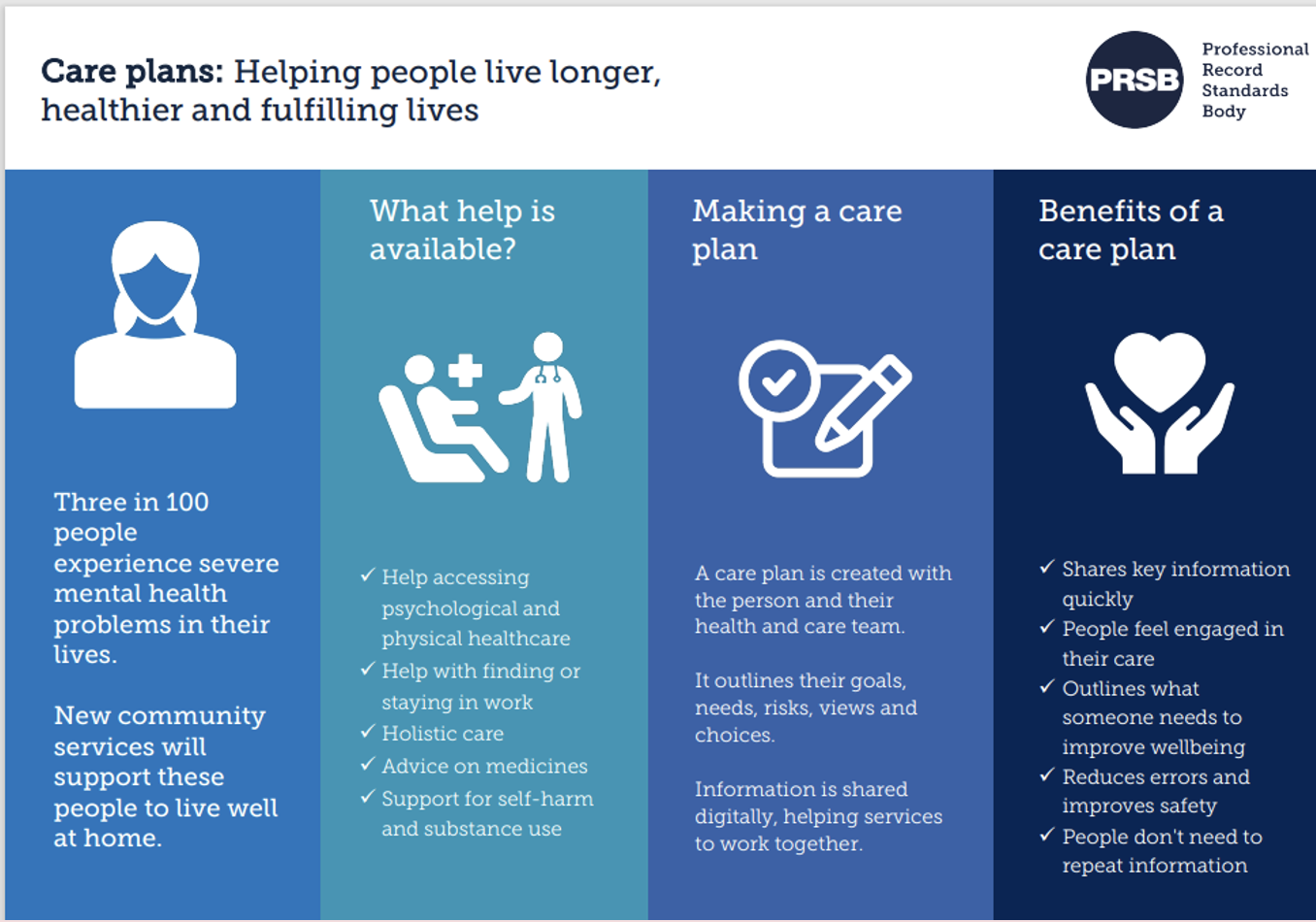
Personalised Care and Support Planning - Why does it matter?

Dr. Nilesh Bharakhada, Exec Clinical Director PRSB, explains the importance of Personalised Care and Support Planning. Watch the explainer video (below) which explains why PCSP matters and what it will mean for patients.

The benefits of implementing the PCSP standard

Exploring the benefits of implementing the PCSP standard will help you position the project with different stakeholders, and help you maintain focus and momentum.

From working with two Mental Health providers, we know that support for the PCSP standard implementation for mental health care planning cannot be taken for granted, so being able to clearly articulate the benefits to both supportive and skeptical stakeholders is crucial.

These quotes (below) offer some insight into the perceived benefits of implementing the PCSP standard to enable the sharing of care and support plans as articulated by specific stakeholders. This is powerful testimony that provides compelling and authentic qualitative data.

Dr John, General Practitioner

“Care planning is really important, because it allows you to understand the person better, really getting to understand what’s important to them, their goals, their wishes, and their priorities. And that really enhances how you provide care for them. Rather than off the shelf you can really personalise and tailor the care that you give them. And I think the health coaching elements of care planning are also just much more of a satisfying way of consulting rather than giving didactic advice … nobody really listens to didactic advice, but actually, if you can kind of structure it in a health coaching way, it’s not only more effective, but it just makes the whole interaction much more enjoyable for the clinician as well”

Read more about Personalised Care and Support Planning and how it is being promoted across healthcare...

PCSP Podcast

A podcast about the benefits of implementing PCSP Standards from the perspective of a strategist, a GP and a mental health nurse.

Successful teams have the functional skills to lead a task, benefit from diversity, and are led in a way that creates time and space for reflection; the ability to take stock periodically, of the task and of the way in which the team is engaged in delivering it. Your stakeholder analysis [HYPERLINK] should help you assemble the most appropriate team and identify how the team interacts and relates to other stakeholders like sponsors, services users, etc.

The variation in the size, both in terms of population served and numbers of constituent organisations, and of complexity, between Integrated Care Systems, precludes the possibility of any prescriptive guidance on the way in which this team is assembled.

Engeström’s expansive learning cycle of learning actions explains how there are 7 stages of learning actions;