
Personalised care works best when information is connected and visible across all services supporting a person, including their GP, hospital teams, community services, social care and local pharmacy. Too often, care plans are stored in separate systems or recorded inconsistently, making it harder for professionals and patients to see the full picture.
Effective personalised care planning depends on systems that can share reliable, standardised, up-to-date information, as well as on equipping people with the right tools and guidance to use them well.
We spoke to Julian Meres, lead health and wellbeing coach for the Hillingdon Confederation, to find out how care planning works in practice across his network.
————————————————————————————————————
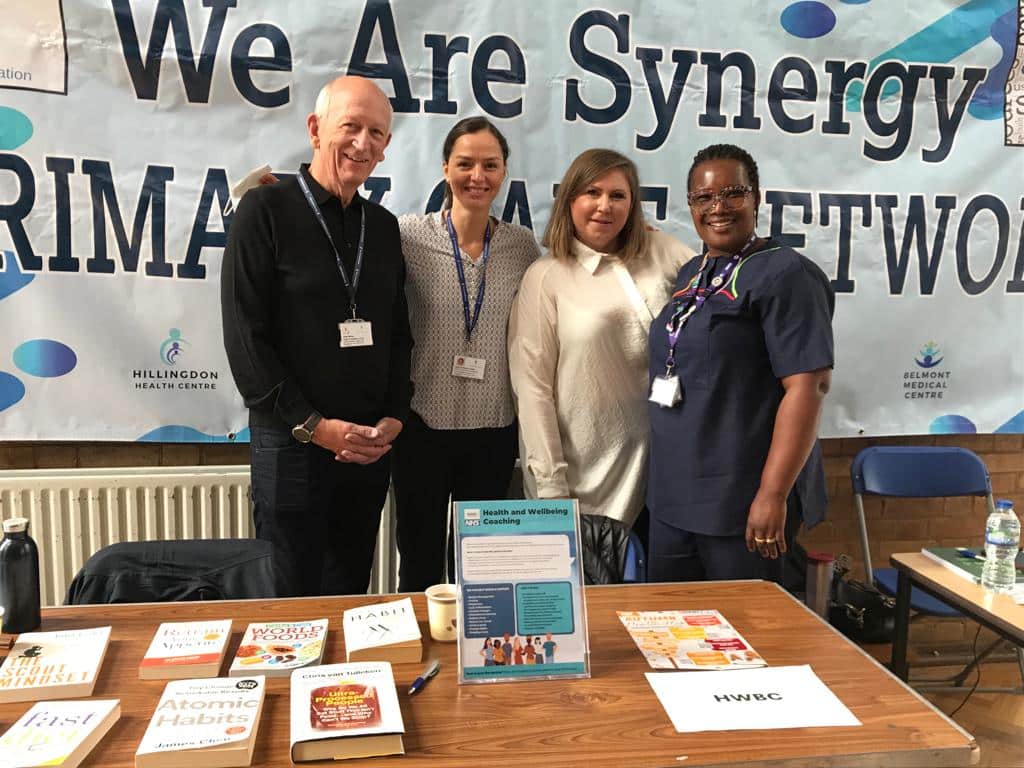
“I see myself primarily as a coach rather than a therapist or counsellor. I start from the belief that the answers are already within the patient, and my role is simply to help bring them to the surface. Personalised care, in my view, must be patient-led.
When patients are offered health coaching, they choose how they want to meet. It can be face-to-face, by phone, or online. Appointments are arranged around them wherever possible. I remind them that they’re the ones calling the shots and in control of their care.
Often, what matters most to a patient is different from what a clinician might initially focus on. Someone may be referred for a specific reason, but what they want to work on could be changing habits, improving sleep, managing stress, or addressing behaviours such as overeating or drinking in the evenings. Health coaching looks at these elements together in a non-judgemental way, emphasising motivation, goal setting, and mental wellbeing.
In our network, personalised care has been developing over the past four years and remains a work in progress. I am one of a small team of health and wellbeing coaches in our four practices. Referrals can come through the traditional GP route, but also from others within the surgery, including reception staff. Someone repeatedly attending with minor ailments may be referred for triage, and from there, they might see a health and wellbeing coach, a social prescriber, or sometimes both.
Often patients have multiple long-term conditions such as obesity, COPD, musculoskeletal issues, fibromyalgia, asthma, or low mood. On top of this, they may be dealing with housing, finances, work, childcare, or juggling multiple hospital appointments and prescriptions. While some of these practical issues are handled through social prescribing, my role is to help people find new ways to cope with the everyday challenges they face.
People often think we are there to fix the problems, but health coaching seeks to shift that dynamic, encouraging individuals to take the reins and try to manage some of the challenges themselves. By focusing on key behaviours such as sleep, eating, physical activity, relaxation and sense of purpose, we help individuals build the confidence and skills to improve their own health and wellbeing.
An essential part of all this work is recording and sharing the information so we can all see a person’s care plan. In Hillingdon, an electronic patient record hub has been developed so that information can be accessed across all surgeries. In the early days, there were multiple logins and some confusion between individual practice systems and the hub. Now it’s used far more consistently and is accessible to all colleagues within the Live Well service. However, full integration is still evolving. Different professionals are using different parts of the system without yet seeing the full picture.
At present people don’t routinely access or input into their personalised care plan. I see this as part of the next important stage of development. When patients can access their care plan regularly, for example through an app, and professionals can input and view information seamlessly, the system will begin to feel coherent and connected.
There are challenges. Training and awareness are key. I know I use only a small part of the care planning template, and much more is possible. For the system to reach its potential, staff need to understand what it can do and buy into it.
From my perspective, as someone advocating for the people I support, the benefits are obvious. A shared digital record helps avoid mixed messages about what different professionals are offering. It saves time and makes the whole system work more smoothly. Some days I have eight in person appointments, so I need to write up my notes straight after each session. That means the right people can see what is happening without delay. Whether it is a social prescribing link worker or a GP, we are all working from the same information. That continuity really makes a difference.
Sometimes patients say they feel they are not being heard and that they have to repeat their story but if personalised care plans and digital systems function as intended, that frustration can be reduced.
For me, the goal is clear. Personalised care planning should not be a collection of disconnected documents. It should be a shared, living record that supports holistic, preventative, and person-centred care. With proper training, good data and systems that genuinely connect, care plans can make sure what matters most to someone is visible to everyone helping them. I would encourage anyone sharing this vision and tackling the challenges of an integrated approach to care planning to begin with the PRSB’s Personalised Care and Support Plan Standard and build from there.”
Resources
The Personalised Care and Support Plan Standard provides a framework for creating a single, lifelong care plan that can be shared and updated by both the person and the professionals supporting them. By setting out clear ways to record, access, and exchange information, the standard aims to make care plans collaborative, joined-up, and centred on what matters most to each person.
If you want to learn more about how you can use this standard please contact us at info@theprsb.org. Whether you are an NHS organisation looking to improve your systems or a supplier aiming to become conformant, we can help.
- View the standard
- Sharing care plans digitally
- How can the Personalised Care and Support Plan standard improve care?
- What information about a person is included in the standard?