

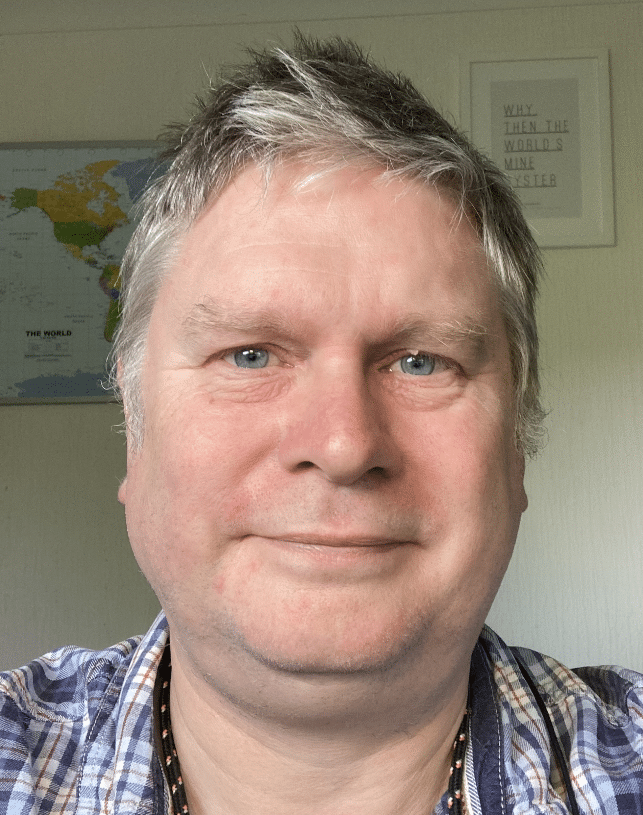
 By Dr Colin Dunkley, Paediatric Consultant and Clinical Lead, Epilepsy12 Audit, RCPCH
For over a decade, many have been working to make epilepsy care more joined-up by using data in smarter ways. As a paediatric consultant and lead for the national Royal College of Paediatrics and Child Health Epilepsy12 audit across England and Wales, my focus has been on how we can together use accurate children’s health data to create meaningful improvements whilst also facilitating better clinical care and research opportunities.
Epilepsy is a common group of long-term neurological conditions that can disrupt lives in dramatic, unpredictable and variable ways. People with epilepsy present to all parts of the health acute and non-acute health system. Seizures often begin and continue at home, in school, at hospital and ‘at the seaside’ and resulting care needs need to be highly individualised and adjusted. Monitoring and diagnostics are becoming increasingly more digital, video on smartphones is emerging as a key diagnostic resource, drug treatment plans change frequently, medication continuity is critical, and care plans must be joined up to be effective across health, education and wider community settings. Often information is not shared, inconsistent, inaccurate, duplicated or absent. Families and professionals are often left to fill in the gaps or move information from one location to another.
Through RCPCH Epilepsy12, our national audit for children and young people, we’ve tried to identify and close gaps in care provision. Since 2009, we’ve gathered data from across England and Wales, following children’s journeys from first presentation over the first 12 months. Our most recent report, covering over 3,000 newly diagnosed children, shows ongoing improvements in many areas of care quality. But it also highlights where the system still fails to deliver and where variation exists between services and between different groups of children.
One clear reflection is that whilst we’ve become good at analysing, understanding and visualising the data once we have it, the real struggle has been getting the data easily and reliably in the first place. There is little that even the best human or artificial intelligence (AI) can usefully or safely do if the information it is considering is inadequate. Manual entry by clinicians can often be slow, inconsistent, and prone to gaps. It introduces a burden of time that could be spent providing actual clinical care. Although information is often held digitally in digital health records or databases it often is in a format that only works locally and is often not easily shared. That’s why a next key step has been standardisation of that information across the health systems, and why we came to PRSB.
We started working with the PRSB in 2023 to build a national data standard for epilepsies. We realised early on if it is to ‘work for children’ it also needs to ‘work for adults’ and be rooted in wide participation with clinicians and service users. The information about epilepsy health needs to embed alongside other health information and this appears to be particularly important for epilepsy given the interactions with development, learning, mental health, pregnancy, fertility, frailty and so many other health and social factors.
By building the model within a ‘whole health, whole population data standard solution’, what surprised me most was how much already existed for other long term health conditions that could also work for epilepsy. Diabetes as an exemplar has acute presentation elements, long term condition elements, wearable devices, care plans and many long-term complications and outcome measures. Using PRSB’s approach – what I’ve grown to understand as a “Lego brick” model – we found most of the building blocks we needed were already in place. Only a few epilepsy specific areas, such as outcome measures and diagnosis-classification elements, needed to be newly built to get things started.
With this standard, we can now work towards a future where data flows not only automatically from healthcare records into audit systems, but also powers self-management tools, care planning, referrals, wearables and other devices, screening tools, pharmacovigilance and ongoing risk assessments and flagging for issues such as SUDEP (Sudden unexpected death in epilepsy). The NHS vision of a single patient record and utilising the NHS App should provide great opportunities for building digital tools and bolt-ons specifically to support the complexity and unpredictability of those with epilepsies.
Through wide consultation and citizen participation and building on what already is in the data standard we’ve been able to consider all life stages. From fertility to pregnancy, birth to childhood, transition to adulthood and end of life. Transition is a key pressure and risk point for those with epilepsy, so designing something that works across the lifespan and life journey makes sense. Our citizen co-leads (had experience transiting from paediatric to adult epilepsy care) were central in shaping this.
Having a standardised data model is fundamental, and PRSB has been a great vehicle for creating something that is designed to connect across systems. We’re aiming to complete the design of work by the end of 2025. Alongside this we are currently planning the future directions of Epilepsy12, and we’re looking to map to patient level data and clinical outcomes more effectively across the NHS. We’ve been watching diabetes transformation closely as it’s a condition that’s already thriving with wearables and digital tools, generating potential streams of real-time data alongside ‘closed loop’ benefits. There will be many useful parallels for epilepsy as we think how to bring tech and data together in meaningful ways around the person.
My final big-picture thought is to consider information flowing not just as an opportunity for ‘patient pathways’, but on opportunities for seamlessly accompanying and enabling life journeys. We need to reimagine health provision to stretch outside of traditional ‘health bubbles’ and enable best life journeys-wherever they are occurring and wherever they may lead.