
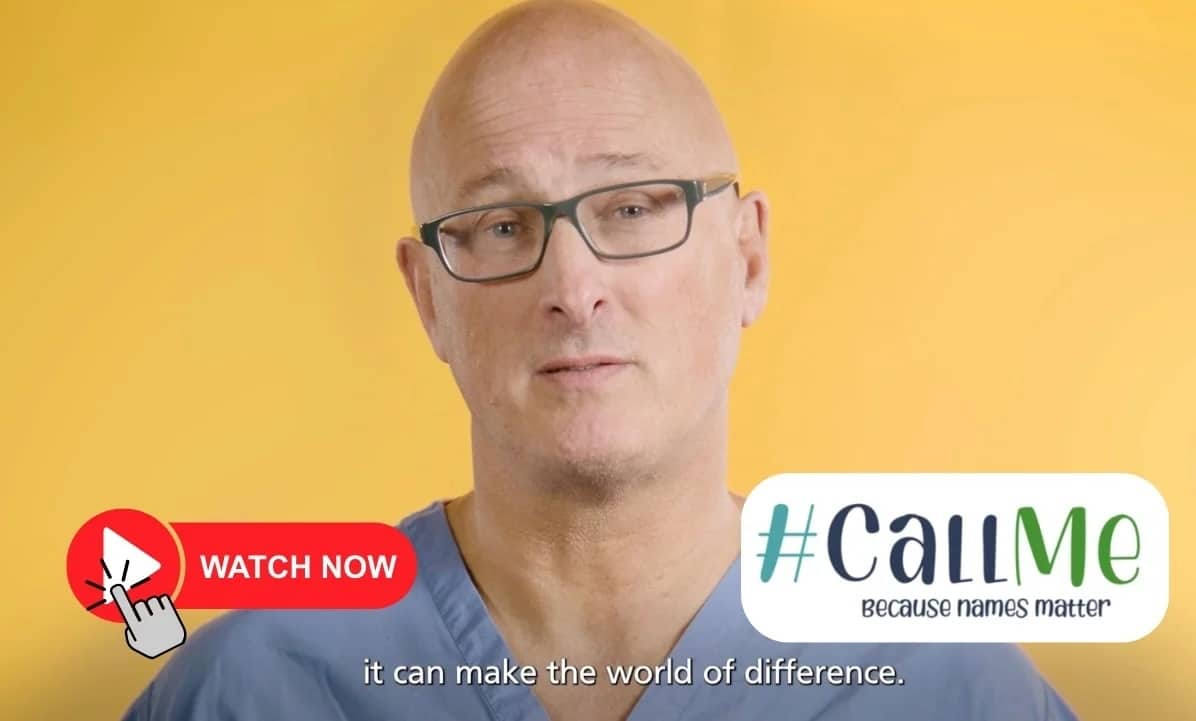
At a recent Advisory Board meeting, we invited Dr Mike McCabe, an anaesthetist at Worcestershire Acute Hospitals NHS Trust, to speak about the #CallMe campaign, which promotes the use of people’s preferred names in healthcare.
Around one in three people use a name that is different from their legal name. #CallMe aims to build cultural awareness and improve systems so preferred names can be recorded and accessed quickly. PRSB standards already include a dedicated data item for preferred name, supporting its use across care settings.
The campaign is focused on making sure a person’s chosen name is used in digital systems, on wristbands and bedside information, helping staff address people correctly. We support this work and want to raise awareness of the campaign. Dr Mike McCabe has shared an update below on progress since our meeting.
 “He is never William, only in hospitals.” A mother said this about her 15-year-old son, who prefers Will.
Thank you to everyone who heard #CallMe at the PRSB Advisory Board in July. Since then the case for recording preferred names has kept moving:
- The evidence keeps growing. Worcestershire Acute Hospitals has now collected more than 300,000 #CallMe records. One in four patients uses a name that differs from their registered forename. Among inpatients aged 65 and over, it’s nearly one in three.
- The Single Patient Record. The question now is whether this is an opportunity to help respect identity with use of preferred names in healthcare? Will it will be a required, well utilised, measured field or an optional one that may sit empty..
National profile.
On 10 September 2026, Tom Collins MP (Worcester) raised #CallMe at Business Questions in the House of Commons
- “Worcestershire Royal hospital has pioneered a project to ensure that every patient it treats is addressed by the name by which they are known… one in four patients are known by a different name from the one that is on their hospital records… Rolling this out across the NHS requires no change to the law, but it does demand leadership from government.”
- Replying for the Government, the Leader of the House said: “I think everyone in the House will join me in praising Worcestershire Royal Hospital and its staff for this initiative. Simple gestures like this help build trust and bring comfort to patients.” Source: HC Deb, 10 September 2026, Business of the House (Hansard).
- On 7 October #CallMe was presented at NHS England’s National Nursing and Medical Update
Preferred name already appears in many systems. What’s missing is consistent capture, display where staff can see it and measurement of how often it’s completed.
How you can help
- Ask your organisation whether it records preferred names, shows them where staff need them and measures completion.
- Consider endorsing #CallMe as an organisation.
Resources at https://callmebecausenamesmatter.org
For more information Contact: Dr Mike McCabe, michael.mccabe5@nhs.net