pharmacy

Films

everyLIFE Technologies – A partner view of standards conformance

everyLIFE Technologies’ Chief Information and Compliance Officer, Taffy Gatawa, spoke at a PRSB partner event on the company’s conformance assessment journey and the many benefits and lessons learned along the way.

Listen to Taffy’s talk on how undertaking the scheme’s conformance process for PRSB’s About Me and Digital Care and Support Plan has improved the development of everyLIFE’s digital products.

The experience has given the company new ways to engage with their care providers and most importantly, enabled the safe transfer of information in social care, supporting providers in administering safe, high-quality care.


Video Playlist
1/4 videos
1
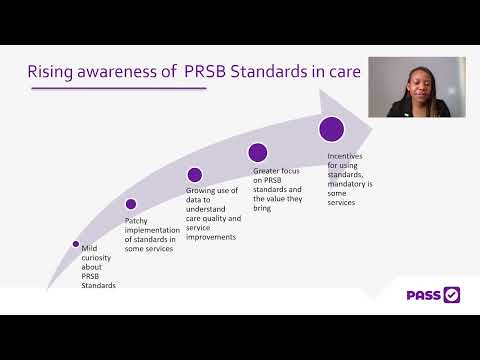
Rising awareness of standards
2
The standards conformance process
3
Outcomes and benefits
4
Lessons learned and next steps

The Paterson Inquiry - PRSB's response

PRSB recommends the full implementation of the Paterson Inquiry’s recommendations for safer care and better patient outcomes.

Today, we are calling on clinicians to write directly to people and drive the culture shift within the profession towards making this practice the norm so people can make informed decisions about their treatment. 

In these clips, Professor Helene Stokes Lampard, Chair of the Academy of Royal Medical Colleges fully supports this work. AoMRC have long advocated for clinicians to write directly to people and AoMRC’s ‘Please, write to me’ guidance underscores this.

PRSB Chair, Professor Maureen Baker explains the benefits to people when we are directly informed of our care. PRSB's standards for care records, in particular for writing outpatient letters, emphasises the importance of writing in a person-centred and easily understandable way.

Video Playlist
1/2 videos
1
Prof Helen Stokes-Lampard
2
Prof Maureen Baker CBE

Shane’s story

For people with complex needs, it's vital that care providers understand what matters to them. Watch Shane's moving story to find out how important the right information is for good care and how it can keep people well and out of hospital.

Are your medical records easy to access and can healthcare professionals share them to streamline care?

We asked members of the public about their experiences with their own medical records and whether they thought the information was shared with the right healthcare professionals at the right time.

Creating a digital maternity record

Frontline clinicians explain why online maternity records will make such a big difference for women, their babies and the professionals who care for them. Karen Selby, PRSB representative from the Royal College of Obstetricians and Gynaecologists; Susanna Lowe, consultant for women and children at Barts Health NHS Trust, and Mary Olusile, midwife at Barts Health NHS Trust explain the positive benefits that digital maternity records and the new PRSB standard will have for women and how they will help to support professionals to do their job.

Matthew’s story shows why digital care plans are so important

Matthew Prosser’s story shows how digitalised care and support plans could change the future of care for people living with long-term health and care needs.

A mother’s view: Catriona’s story

Plans are afoot to get maternity records online, which will be supported by our new maternity standard. We speak to Catriona Davenport about the positive benefits that online records will have for mother’s.

Completing a discharge summary

Healthcare professionals discuss the importance of a good discharge summary and Dr Tim Yates, from the Royal Free Hospital, guides us through the process of completing the hospital discharge summary form.

Completing a discharge summary – training film

Improving care record sharing in health and social care

A brand new animation to highlight the importance of improving health and care information sharing, in collaboration with Understanding Patient Data, based at the Wellcome Trust.

E-discharge summary films

GP videos encourage junior doctors to recognise the importance of e-discharge summaries

Pharmacies are using the e-Discharge summary standard to improve patient experience and care

Parents and carers like Sabine Qureshi are helping us to create our standards

An introduction to the PRSB and our work

The importance of standards in digital health and social care – Keith McNeil

CHAT theory also explicitly addresses five areas which if addressed systematically will help overcome stakeholder differences in pursuit of the common goal:

1. Understanding the artefacts that characterise the group and its activity.
• The artefacts might be clinical settings or the forms and templates used to capture and share information. During the pilot we heard about hard copy Dialog response forms; locally generated templates for collating information from different systems; letters and emails to GPs; images, poems or other non-text artefacts that service users might want to include in their ‘about me’ or care plan.

2. Understanding the multi-views of the group. Such groups are always a community of multiple points of view, traditions and interests. 
• Different participants in the group will have different roles and will bring to the group and their roles their own histories, language, and ‘rules’. During our Stocktake preparations and workshops we worked with psychiatrists, mental health nurses, occupational therapists, social workers, transformation leads and voluntary sector representatives, all professions and interests with their own language, approaches professional ‘rules’ but united in their interest in care plans, care planning.

3. Activity systems (like the ICSs) take shape and get transformed over periods of time. ‘Historicity’ is a term coined to express how the group’s problems and potentials can only be understood against their own history. 


• ‘We’ve always done it this way’, ‘that didn’t work before’, ‘it’s always like this’, ‘it wasn’t always like this’, ‘they are changing things again’, are all typical statements that often frustrate those charged with overseeing change initiatives. Without addressing the experiences that lie behind such comments you risk repeating mistakes of the past, alienating your stakeholders or just not understanding the real starting point for your transformation project. This is particularly the case for the implementation of the PCSP standard, the success of which will be largely reliant on point-of-care practices and information protocols as well as having systems which are user friendly and appropriately configured.

4. The central role of contradictions as sources of change and development. Contradictions are not the same as problems or conflicts. Contradictions are historically accumulating structural tensions within and between activity systems. Collectively addressing contradictions in how policy, practice, culture and technology interact will empower teams to find genuinely novel solutions for apparently intractable challenges, like interoperability and shared care plan/planning. 

This links to the fifth principle that:

5. the possibility of expansive transformations in activity systems. As the contradictions of an activity system are aggravated, some individual participants begin to question and deviate from its established norms. In some cases, this escalates into collaborative envisioning and a deliberate collective change effort. “An expansive transformation is accomplished when the object and motive of the activity are re-conceptualised to embrace a radically wider horizon of possibilities than in the previous mode of the activity.”

Personalised care and support planning for people with severe mental illness

A review of a sample of current care plans, and the way they have been developed, may be helpful in identifying the priorities for this improvement. The PRSB Implementation Guide provides more detailed explanations about each element of the plan, including advice on how the planning process might be best conducted.
These questions might form a checklist for current plans to be compared with. 

1. Does the plan include an About Me section in which the service user, in their own words, can indicate the information they want to be available about their lives, their values, their interests, and priorities, available for all those who may care for them?
2. Is the approach to developing a care plan patient centred and engaging, allowing plans to be based on patient priorities goals, and aspirations, along with the actions they plan to take and the support that they will receive?
3. Is there space for a “formulation” to be recorded in which the person receiving care and the professionals who provide it, share and record the personal meaning and the origins of the person’s difficulties?
4. Are relevant procedures and therapies recorded?
5. Where relevant, are one or more contingency plans included for anticipatable disruptions, exacerbations, or deterioration, and do they include advice on what to do and points of contact for those called upon to respond?
6. Where relevant are additional supporting plans incorporated, (an example being an “educational and health plan” for someone with a neurodevelopment disorder)
7. Is a version of the plan available to a service user (if they wish to have it) in a form and format that they can understand and find to be of value?
8. How is a version of the plan available to the GP and other key parts of the health and care system?

Work conducted by PRSB and partners recently has looked specifically at the suitability of this approach to the development and documentation of care and support plans for people with Severe Mental Illness. This resulted in an updated version of the standard (v1.4), for use by any service and for any group of service users, but with some modifications to ensure that it meets the needs of this community. The approach to a patient centred process of identifying goals, hopes, and values, and the support needed to achieve them, is fully compatible with and can be conducted using, specific tools in use in mental health, such as DIALOG, DIALOG+, and ReQoL, for example. 

Where analysis indicates the need for improvement in the content and process of personalised care and support planning for patients with Severe Mental Illness, specific improvement projects should be instituted to co-design with service users and their representatives, and the relevant staff groups, new approaches, and documentation that would be of value in delivering improvement. The toolkit includes a range of existing resources that could be used to engage in this improvement work, including signposting to relevant existing approaches informed by patient experience-based design.

Moving to a single holistic plan

A review of a sample of current care plans, and the way they have been developed, may be helpful in identifying the priorities for this improvement. The PRSB Implementation Guide provides A key development, consistent with national policy on support for Personalised Care across all health and care sectors, is the move towards an individual with complex needs having a single, integrated, care plan, rather than a series of plans developed by different parts of the health and social care system in isolation of one another. For a patient with severe mental illness, the related concerns and challenges might form a very prominent part of such an integrated plan; many will also have concurrent health challenges and needs. The intention is that the relevant services work together to plan and wrap support around the patient and their family in an integrated way, rather than as a series of sequential or disconnected encounters in which the service user or their friends and family have to adopt the role of the integrator.

A starting point would be to agree priority groups of service users who may already have more than one care plan because they need care from more than one part of the system of health and social care. This could be initiated by looking at service users registered with some sentinel practices or PCNs. Alternatively, the approach might focus initially on people with defined co-morbidity or risk that entails collaborative care with agencies beyond specialist mental health services.

The focus here is on the process of care planning and agreement on what should be shared, rather than solely on the technology used;

1. What is the process to agree which professional will initiate care planning and act as the “lead point of contact” for the service user?
2. Will initial plans be agreed with the service user in joint consultations or sequentially? Where and how will they be conducted?
3. What will be the process to agree the elements of the plans which should be available to professionals and potential authorised users beyond the immediate care teams, (A&E services, Ambulance Services, Social services, etc.) with the service user’s consent?
4. How will elements of the plan be updated following consultations in a way which is proportionate, to allow contact and progress notes to be maintained by the service conducting the consultation, whilst avoiding unnecessary work for partners in care if there is no significant change to the personalised care and support plan?
5. What are the implications for workload, logistics, and administration arising out of these decisions?

The answers to these questions and others will best be elicited through focused joint working, grounded in real, or at least realistic examples. This will entail process mapping, and co-design with a range of professionals, service users, and families. Resources from the toolkit and outputs from the Simulation element of this project will be valuable. Some organisations would adopt an approach such as a Rapid Process Improvement Workshop, planned over several weeks and conducted over a number of sequential days, to develop prototype ways of working that could be tested in the field.

Successful teams have the functional skills to lead a task, benefit from diversity, and are led in a way that creates time and space for reflection; the ability to take stock periodically, of the task and of the way in which the team is engaged in delivering it. Your stakeholder analysis [HYPERLINK] should help you assemble the most appropriate team and identify how the team interacts and relates to other stakeholders like sponsors, services users, etc.

The variation in the size, both in terms of population served and numbers of constituent organisations, and of complexity, between Integrated Care Systems, precludes the possibility of any prescriptive guidance on the way in which this team is assembled.

Engeström’s expansive learning cycle of learning actions explains how there are 7 stages of learning actions;